Workflow Orchestration
Master the logic of multimodal generative pipelines: from text scripts and concept keyframes to dynamic video connections, and best practices for multi-branch exploration.
In traditional single-point AI tools, creators must shuffle files between input boxes and download folders. In AZ8, Workflows serve as the engine of complex visual storytelling: by seamlessly connecting outputs from upstream nodes into downstream inputs, data and aesthetic style flow continuously across the entire canvas—creating a coherent, non-destructive shot production pipeline.
1. Connection Mechanics & Data Flow
Every node on the canvas acts as both a generation unit and a data relay station. Drag from node connection handles to establish mapping across modalities:
| Transmission Link | Data Source | Data Consumer | Creative Value |
|---|---|---|---|
| Script Drives Visuals | Text Node | Image Node | Injects scripts, dialog, or prompts into image generators without copy-pasting |
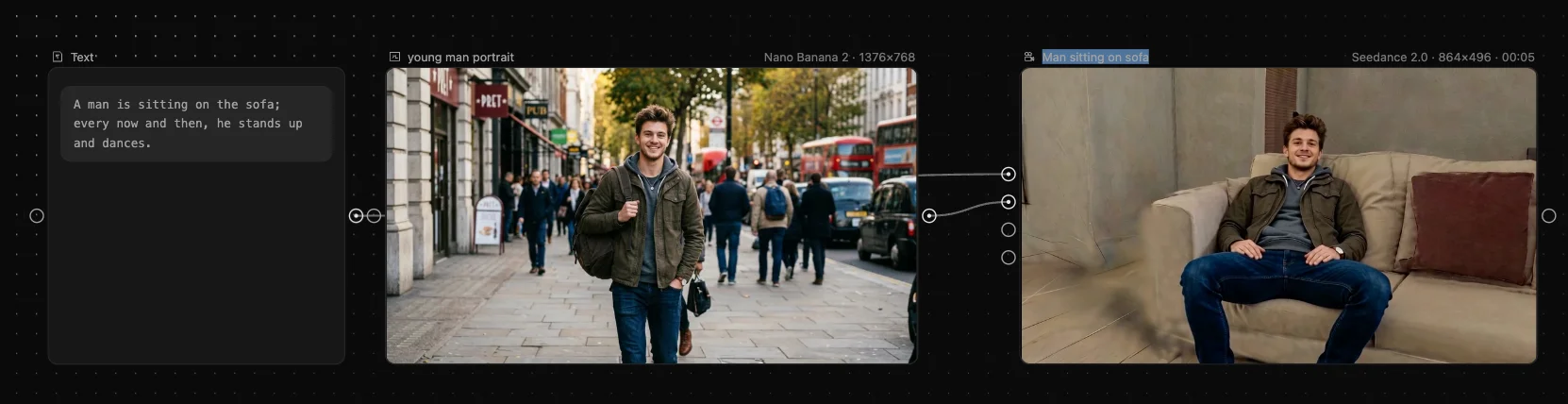
| Frame Drives Motion | Image Node | Video Node | Supplies first frames, last frames, or visual style reference for video generation |
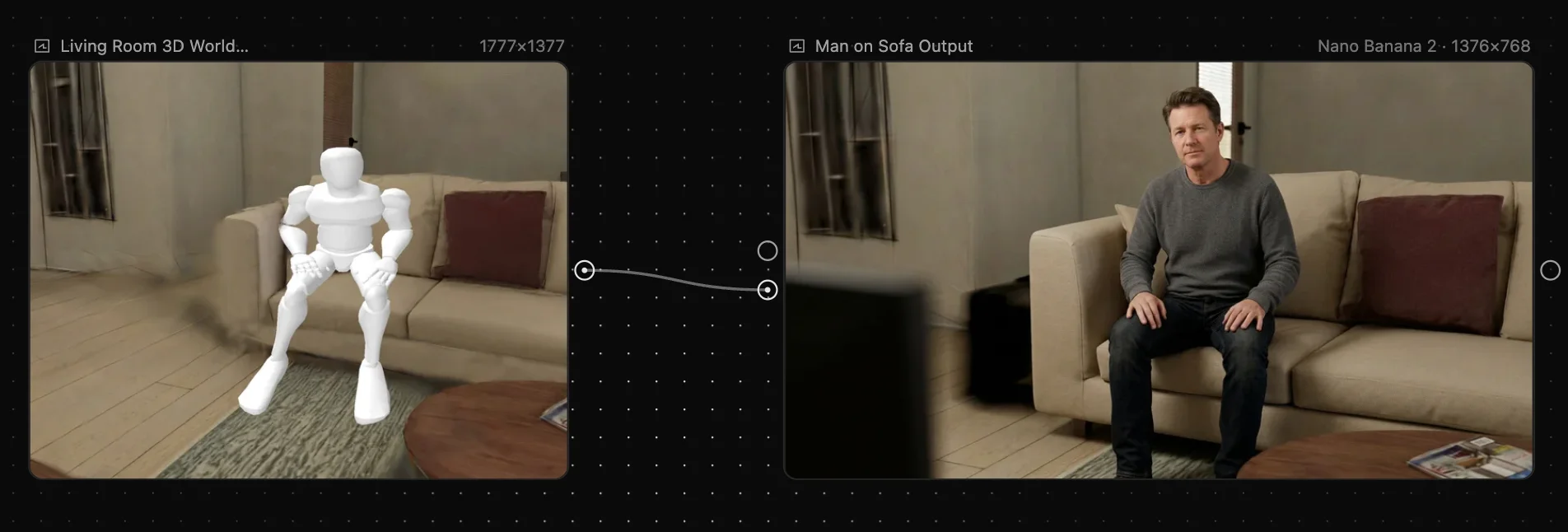
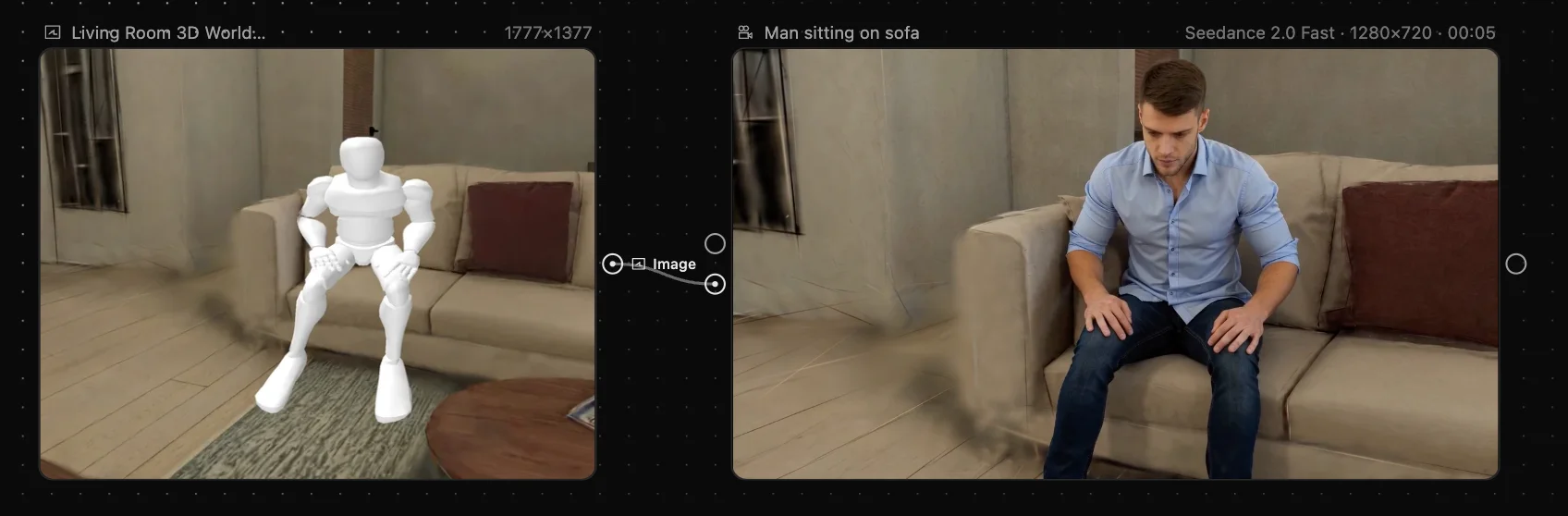
| Camera Perspective Anchor | 3D World Node | Image / Video Node | Extracts 3D viewports as spatial anchors to lock architecture and camera angles |
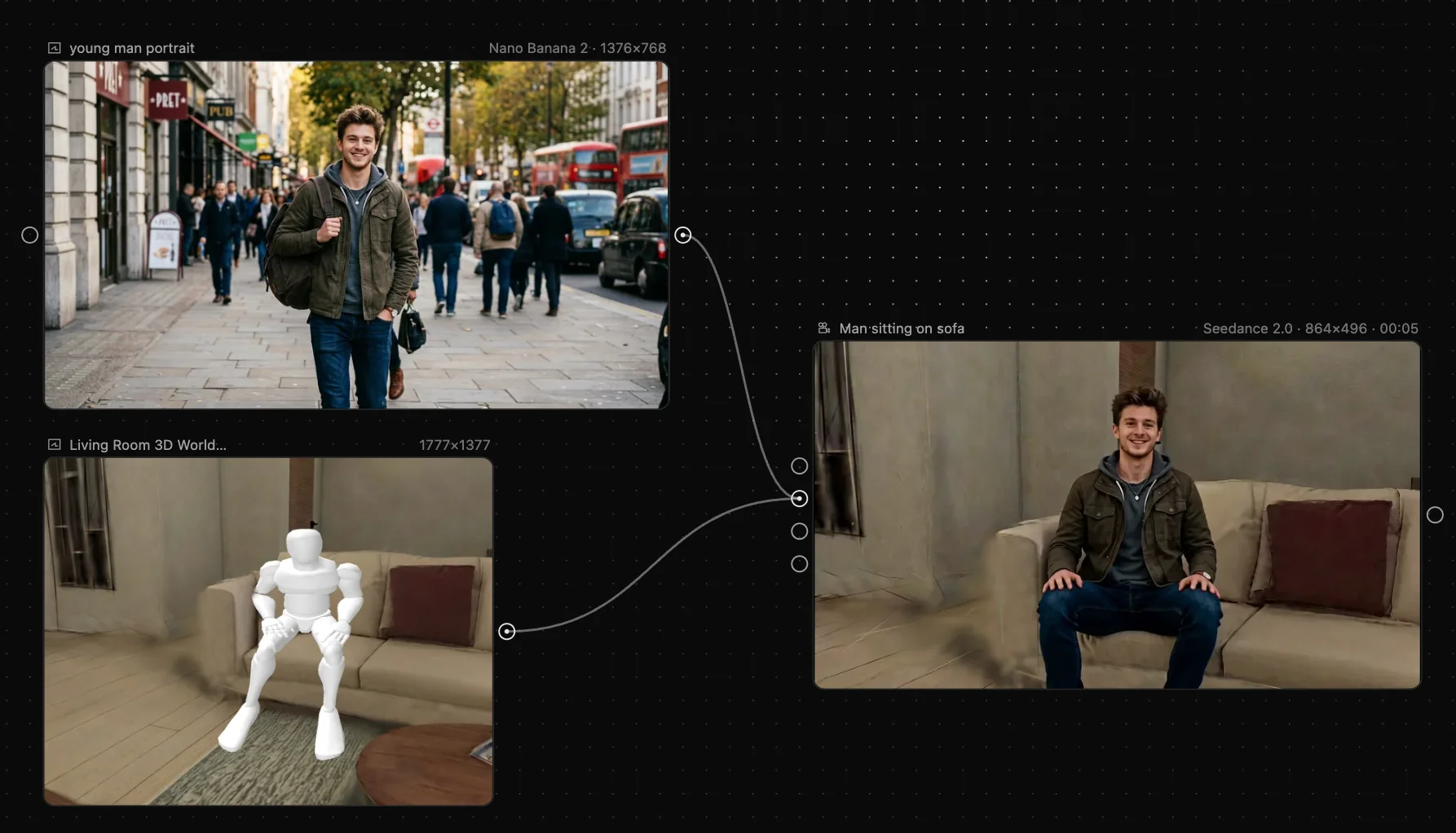
| Spatial Asset Projection | Image Node | 3D World Node | Maps generated textures, characters, or props onto geometry in the 3D space |
| Audio-Visual Sync | Text / Video Node | Audio Node | Generates matching background scores, foley, and voiceovers matched to shot timing |
2. Three Classic Workflow Paradigms
Depending on the degree of creative control required, AZ8 supports three workflow paradigms:
Paradigm 1: Classic Text-to-Image to Image-to-Video
The most lightweight and rapid starting point, ideal for early story drafting and quick concept validation:
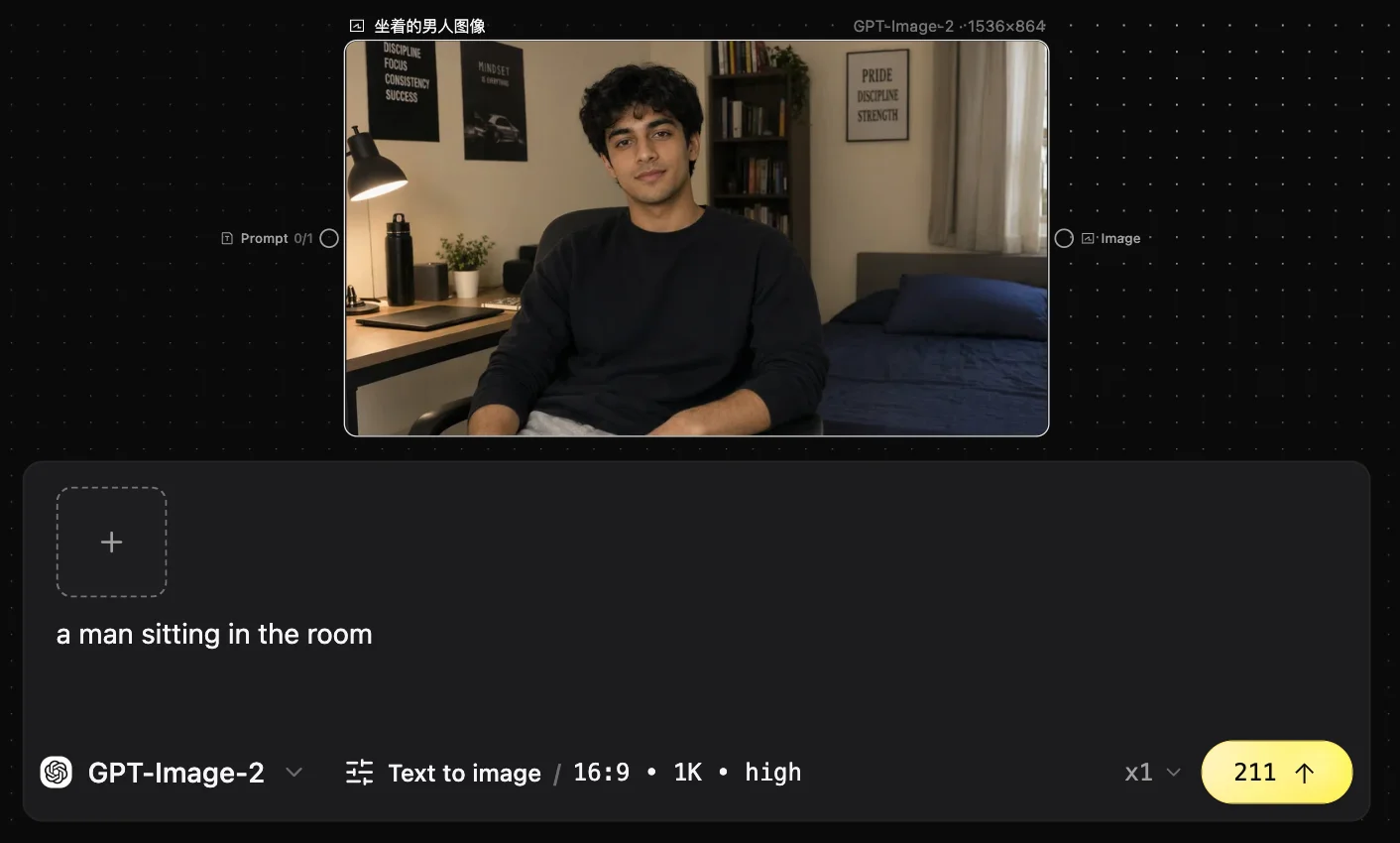
- Image Pipeline: Text node structures prompt → Image node generates multiple parallel concept takes.
- Video Pipeline: Select the winning concept keyframe → Connect to video generation node with camera motion prompts.
Standard Image Generation Pipeline
Classic Image-to-Video Continuity Pipeline
Paradigm 2: 3D Camera Assisted Precision Control
For professional cinematography requiring strict camera height, consistent perspective, and character spatial relationships across cuts:
- Lock Spatial Composition: Position camera height and FOV in 3D World to output an anchor frame for background image generation.
- Character & Prop Projection: Project generated costumes or props onto 3D stand-ins, then drive video generation along the animated camera trajectory.
3D Viewport Anchors Scene Perspective
3D Scene Projection + Continuous Camera Guidance
Paradigm 3: Direct 3D Trajectory Video Drive (Advanced)
The cutting edge for continuous long takes and complex fly-through shots: export continuous camera movement tracks from the 3D timeline directly into the video diffusion model.
3. Multi-Branching & Organization Tips
- Multi-Branch A/B Testing: Connect one upstream output simultaneously to multiple downstream models (e.g. running both Sora 2 and Kling 3.0 Pro) to compare fidelity side-by-side.
- Node Grouping & Color-Coding: Group nodes belonging to a specific sequence and assign colors (e.g. green for approved, yellow for revision).
- Save Pipeline Templates: Save mature workflows directly to your Asset Library to reuse in future episodes, ensuring visual consistency across an entire series.